
SEO VS AEO
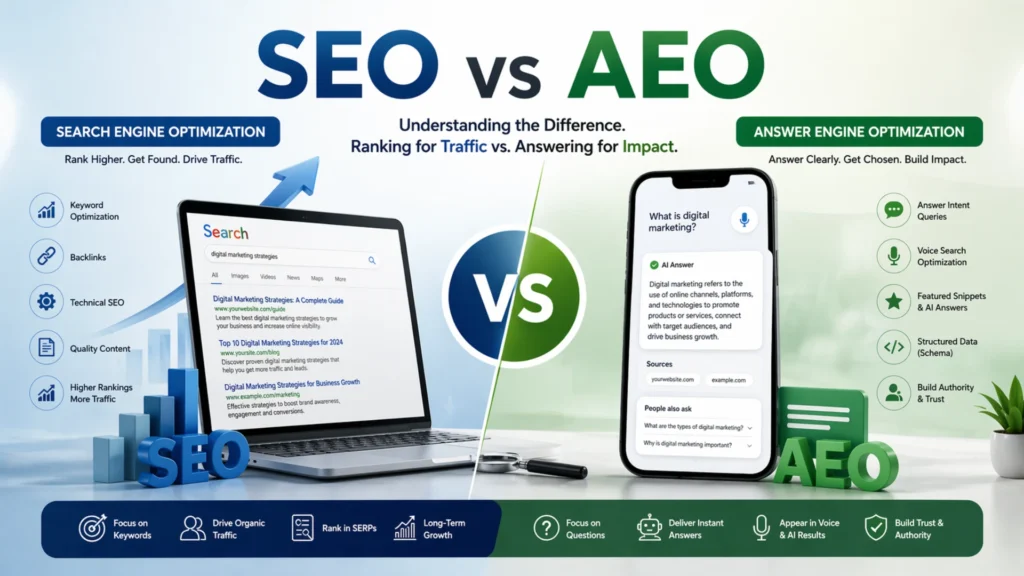
Search Engine Optimization (SEO) and Answer Engine Optimization (AEO) are both strategies used to improve online visibility, but they focus on different outcomes. SEO is centered on improving a website’s ranking in search engine results pages to drive organic traffic. It involves optimizing keywords, content, backlinks, and technical performance so that users can discover your website when searching for relevant topics.
AEO, on the other hand, focuses on providing direct answers to user queries. Instead of only aiming for higher rankings, AEO helps your content get selected as a featured snippet, voice search result, or AI-generated answer. It emphasizes clear, concise, and well-structured information.
While SEO is about bringing users to your website, AEO is about delivering the exact information users need instantly—even without requiring them to click. SEO typically targets keywords and long-form content, whereas AEO focuses on question-based queries and conversational language.
Understanding SEO vs AEO helps businesses create content that not only ranks well but also delivers instant, relevant answers to users. A well-balanced SEO vs AEO strategy ensures better visibility across both traditional search results and AI-driven platforms.
In today’s digital landscape, both SEO and AEO are important. SEO builds long-term visibility and traffic, while AEO enhances your chances of appearing in modern search formats like voice assistants and AI-driven results. Using both strategies together ensures a stronger and more future-ready online presence.
What is SEO (Search Engine Optimization)?
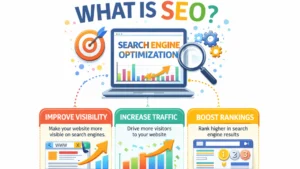
Search Engine Optimization, commonly known as SEO, is the process of optimizing a website to improve its visibility in search engine results pages. The primary goal of SEO is to rank higher for specific keywords so that users can find your website when searching for related information.
When a user types a query into a search engine, the algorithm analyzes millions of webpages to provide the most relevant results. SEO helps ensure that your content meets the criteria used by search engines to determine rankings.
Where SEO Appears
- Search Engine Results (SERPs)
- Website Pages
- Local Search Listings
- Image Search Results
- Video Platforms
- Featured Snippets
- Voice Search Results
- Social Media & External Sites
Key Elements of SEO
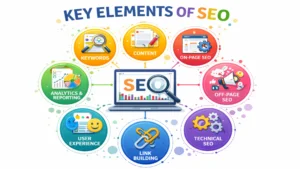
1.On-Page SEO
Optimizing content, keywords, headings, images, and internal links within your website.
2.Off-Page SEO
Building authority through backlinks, social signals, and online mentions.
3.Technical SEO
Improving website speed, mobile responsiveness, security, and overall performance.
4.Content Optimization
Creating valuable, relevant, and engaging content that meets user intent
What is AEO (Answer Engine Optimization)?
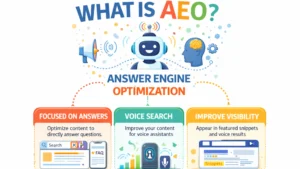
Answer Engine Optimization (AEO) is the process of optimizing your content so it can be directly selected and displayed as answers by search engines and AI-powered platforms. Instead of only focusing on ranking higher in search results, AEO aims to provide clear, concise, and accurate answers to user queries. This helps your content appear in featured snippets, voice search results, and AI-generated responses.
AEO content typically appears in several formats, including:
- Featured snippets on search engines
- Voice assistant responses
- AI chatbot answers
- Knowledge panels
- “People Also Ask” sections
In these cases, users often receive the answer immediately without needing to click on a website.
Key Elements of AEO
To optimize content for answer engines, marketers need to focus on several factors:
- Clear and Direct Answers
Content should provide concise and accurate answers to common user questions. - Structured Content
Using headings, bullet points, and lists makes it easier for answer engines to extract information. - FAQ Sections
Frequently Asked Questions sections help answer engines identify relevant responses quickly. - Schema Markup
Structured data helps search engines understand the context of content and increases the chances of appearing in featured snippets. - Conversational Language
Since many queries come from voice search, content should be written in a natural and conversational tone.
Key Differences Between AEO and SEO
1.Search Intent
SEO mainly targets keywords, while AEO focuses on questions and user intent.
For example:
SEO keyword:
“digital marketing strategies”
AEO query:
“What are the best digital marketing strategies?”
2.Content Format
SEO content may include long articles optimized for keywords. AEO content, on the other hand, prioritizes direct answers and structured information.
3.User Experience
SEO often requires users to click a link and read the full article. AEO aims to provide the answer instantly.
4.Search Results Appearance
SEO results appear as a list of links, while AEO results appear as:
- Featured snippets
- Voice responses
- AI-generated summaries
5.Traffic Impact
SEO focuses on increasing website traffic. AEO focuses on becoming the trusted source for answers, which may or may not generate clicks.
The Future of Search Optimization
The future of search will likely combine traditional SEO with AI-driven answer engines. Search engines are becoming smarter, and AI technologies are changing how information is delivered.
In the coming years, we can expect:
- More conversational search queries
- Greater reliance on AI-generated answers
- Increased importance of structured data
- Integration of search engines with AI assistants
Businesses that adapt early to these changes will gain a competitive advantage in the digital marketplace.
Common Mistakes to Avoid in SEO and AEO
Many businesses attempt to optimize their websites but fail to achieve results due to common mistakes. Avoiding these mistakes can significantly improve your search performance.
1. Keyword Stuffing
In the past, some marketers attempted to rank higher by repeating the same keyword multiple times throughout their content. Modern search engines penalize this practice.
Instead, focus on writing naturally and providing valuable information.
2. Ignoring User Intent
Ranking for a keyword does not guarantee success if the content does not satisfy the user’s intent. For example, a user searching for “how to start a blog” expects a step-by-step guide, not a promotional article.
Understanding user intent is essential for both SEO and AEO.
3. Poor Content Structure
Long blocks of text without headings or formatting make it difficult for both readers and search engines to understand your content.
Using headings, lists, and structured sections improves readability and increases the chances of being selected for featured snippets.
4. Slow Website Performance
Page speed plays a critical role in SEO. A slow website can negatively impact rankings and user experience.
Optimizing images, reducing unnecessary scripts, and using reliable hosting can help improve website performance.
5. Lack of Content Updates
Search trends and information change over time. Updating existing content ensures that it remains accurate and relevant.
Fresh content signals to search engines that your website is active and trustworthy.
SEO and AEO for Businesses and Marketers
For businesses, integrating SEO and AEO strategies can lead to significant growth in online visibility and customer engagement.
Increased Brand Authority
When your content consistently appears in search results and answer engines, users begin to view your brand as a trusted source of information.
Higher Customer Engagement
Providing direct answers and valuable content improves the user experience, increasing the likelihood that visitors will interact with your brand.
Competitive Advantage
Many businesses still focus solely on traditional SEO. By incorporating AEO strategies early, companies can gain a competitive advantage in emerging search technologies.
Better Conversion Opportunities
High-quality informational content builds trust with potential customers. When users trust your expertise, they are more likely to choose your products or services.
The Evolution from SEO to AEO: How Search Behavior Is Changing
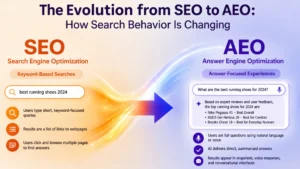
To better understand the difference between SEO and AEO, it is essential to examine how search behavior has changed over time. Users would enter short and simple keywords like “digital marketing,” “restaurants near me,” or “best laptops,” and the search engine would display a list of relevant links.
During this period, SEO played a crucial role. Businesses focused on optimizing their websites with targeted keywords, backlinks, and technical improvements to achieve higher rankings in search results.
As technology progressed, user expectations also evolved. People now look for quick and direct answers instead of browsing through multiple links. natural language processing have significantly improved how search engines interpret and respond to queries. Rather than relying only on keyword matching, search engines now understand the intent behind user searches.
This transformation has led to the rise of Answer Engine Optimization (AEO).
AEO is designed to provide clear and accurate answers to user questions instead of simply directing them to webpages. This shift highlights a major change in how users interact with search platforms and digital content.
Understanding SEO vs AEO is essential for adapting to these changing search behaviors and meeting modern user expectations. A strong SEO vs AEO approach helps businesses stay relevant by combining traditional ranking strategies with answer-focused content delivery.
Measuring Success: SEO vs AEO Metrics
Measuring performance is essential for improving any digital marketing strategy. However, SEO and AEO require different metrics.
SEO Performance Metrics
Traditional SEO success is measured using metrics such as:
- Organic website traffic
- Keyword rankings
- Click-through rate (CTR)
- Backlink growth
- Page engagement
These metrics help determine how well a website performs in search engine results.
AEO Performance Metrics
AEO success focuses more on visibility and authority rather than clicks.
Important AEO metrics include:
- Featured snippet appearances
- Voice search visibility
- “People Also Ask” inclusion
- AI-generated answer references
- Brand mentions in AI responses
Although AEO may not always drive direct traffic, it increases brand credibility and awareness.
The Relationship Between SEO, AEO, and Content Marketing
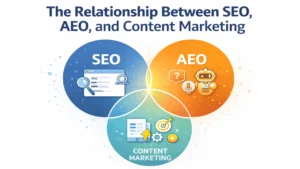
Content marketing plays a crucial role in both SEO and AEO strategies. High-quality content provides the information that search engines and AI systems use to answer queries.
Effective content marketing strategies include:
- Educational blog posts
- Step-by-step guides
- Tutorials
- FAQs
- Industry insights
When content addresses real user questions, it naturally aligns with both SEO and AEO goals.
For example, a blog post titled “Complete Guide to SEO and AEO” could include:
- Definitions
- Comparisons
- Examples
- Practical strategies
Such content is valuable for readers and also increases the likelihood of appearing in search results and answer engines.
The Future of SEO and AEO Integration
- AI-powered personalized results
- More conversational search interfaces
- Integration of augmented reality search
- Greater emphasis on expertise and credibility
- Increased importance of structured data
Businesses that focus on delivering helpful, trustworthy information will benefit the most from these changes.
Why Marketers Must Adapt Now

- Greater visibility in AI-driven platforms
- Higher chances of appearing in voice search results
- Improved authority in your industry
- Better alignment with future search technologies
Companies that understand both SEO and AEO will be better prepared to reach audiences across multiple digital channels.
Conclusion: The New Era of Search Optimization
Search is no longer just about ranking on the first page of results. It is about providing the best possible answer to a user’s question. SEO remains essential for driving organic traffic and improving website visibility. AEO complements SEO by ensuring that content is optimized for AI-powered systems, voice assistants, and instant-answer features. Together, these strategies represent the next stage of digital marketing evolution.
Businesses that focus on quality content, clear structure, and user-focused answers will not only rank higher in search engines but will also become trusted sources of information in the rapidly growing world of answer engines. In the end, success in modern search optimization is not just about being found—it is about being the answer people trust most.
Search optimization is no longer limited to ranking webpages. As technology evolves, digital marketers must expand their strategies to include both Search Engine Optimization (SEO) and Answer Engine Optimization (AEO).SEO helps websites gain visibility and attract organic traffic through search engine rankings. AEO ensures that content is structured and optimized to provide direct answers through AI systems, voice assistants, and featured snippets. Rather than viewing AEO as a replacement for SEO, businesses should treat it as a complementary strategy. By creating high-quality, structured, and user-focused content, organizations can succeed in both traditional search results and modern answer engines.
In an increasingly AI-driven digital world, understanding the relationship between AEO and SEO will be essential.
Author : LIYA K
very helpfull